
US drinking water is getting cleaner, Gies Business research finds
Oct 15, 2026
A sweeping study of US drinking water finds pollution has fallen by half and federal infrastructure loans reduce pollution and improve health.

What flourishers do differently: Three habits for handling workplace stress
Oct 14, 2026
Flourishing employees manage stress through three learnable habits: Reframe setbacks by putting them in perspective, Reach Out for advice and emotional support, and Reset through movement, nature, mindfulness, or deliberate breaks. These habits can help keep stress from compounding.
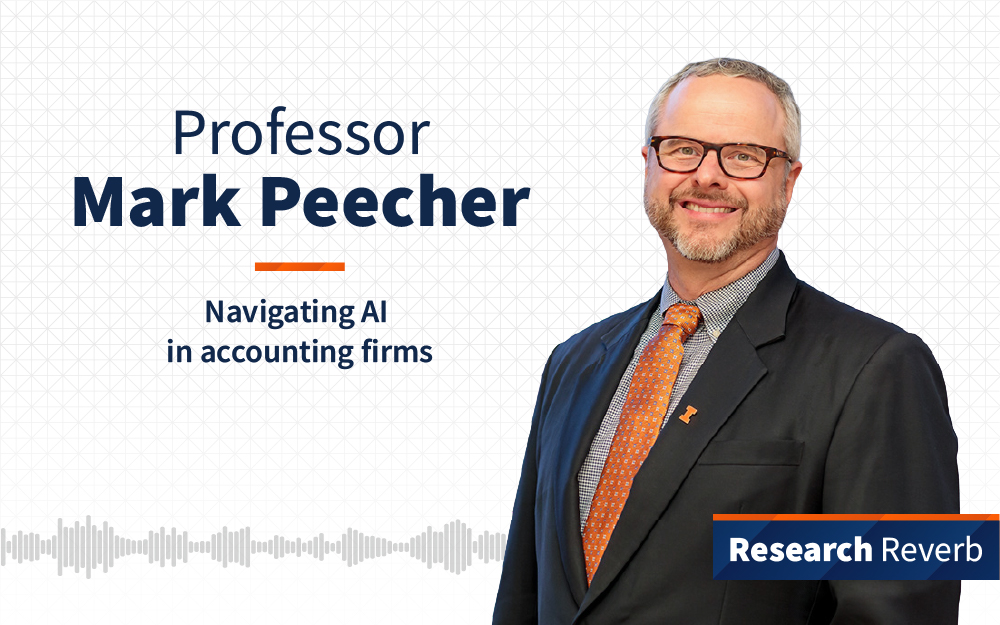
PODCAST: Navigating AI in accounting firms
Oct 13, 2026
Research finds that experienced auditors may discount sound AI advice when they feel their expertise is being displaced and how organizations can help professionals embrace AI as a partner.
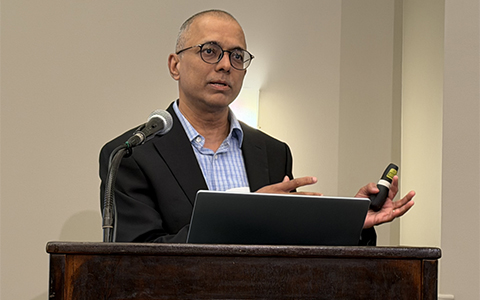
Drug shortages, social media, and nursing home care highlight healthcare conference topics
Oct 12, 2026
The Midwest Healthcare Management Conference hosted by Gies Business and Carle Illinois College of Medicine highlighted research on three healthcare challenges: mapping pharmaceutical supply chains to address rural drug shortages, using social media to support mental health, and tackling nursing home staffing shortages.

Artificial intelligence and its impact on creative content
Oct 09, 2026
Generative AI can help creative marketplaces deliver more personalized content and increase profits, potentially allowing platforms to charge a premium. These benefits rely on work contributed by human creators, who may receive little or no compensation when their content is used to train AI.

How Gies Business designs ultimate stage for Accountancy research
Oct 07, 2026
By bringing together diverse methodologies, connecting academia with practice, and opening doors for the next generation, Gies Business ensures that its top-ranked status is something proven and earned with every hosted event.

New research explores how AI changes what we think we know
Oct 05, 2026
AI assistance can improve accuracy as much as reading the material, yet even using AI once may make people feel less confident in their understanding. New research from Gies Business suggests polished output does not reveal whether someone can independently explain, defend, or apply the underlying knowledge.
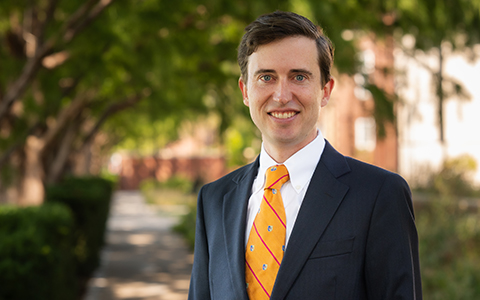
Van Landuyt joins Gies Business to study human side of accountancy
Oct 01, 2026
Drawing on his experience as a professional auditor, Ben Van Landuyt uses experimental research to explore auditors’ decisions and teaches students how to navigate accounting’s real-world gray areas.
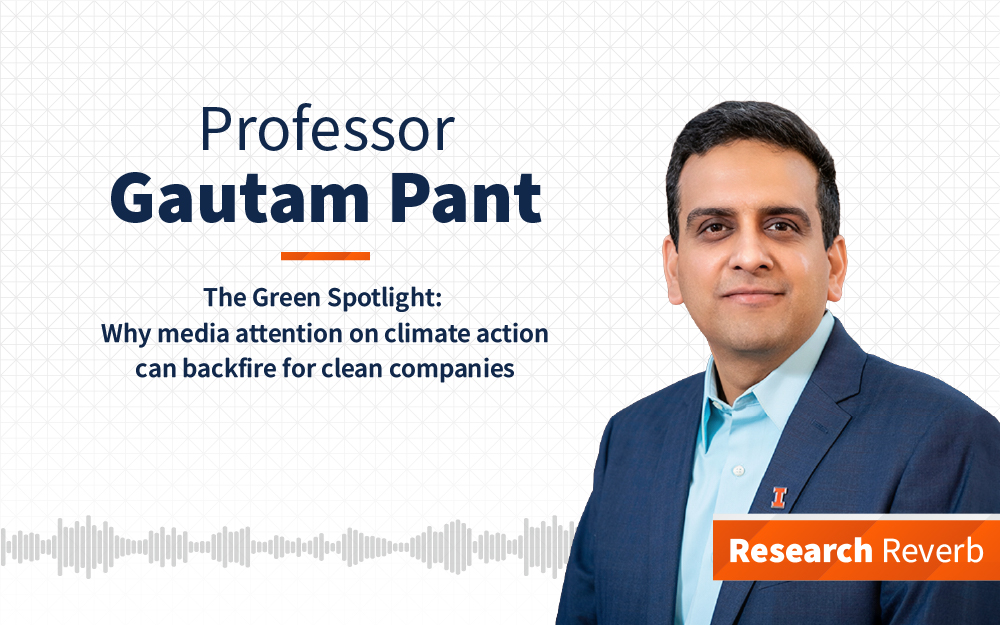
PODCAST: Why media attention on climate action can backfire
Sep 29, 2026
Media coverage of climate action can hurt already low-polluting companies by raising expectations, operational costs, expenses, and debt. The same attention can help high-polluting firms improve efficiency, reduce regulatory costs, and strengthen their reputations.
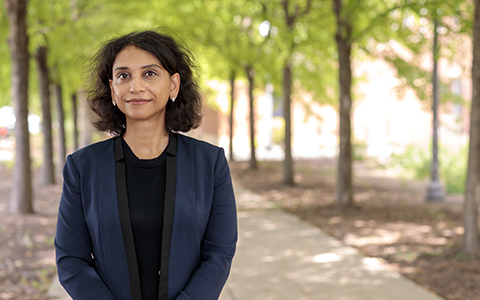
Specialization can speed scientists’ rise, then slow them in management, study finds
Sep 28, 2026
Research finds that scientists benefit from deep expertise, which can improve their effectiveness in specialized technical work. Managers must coordinate teams, communicate across fields, manage projects and budgets, and integrate different areas of expertise.
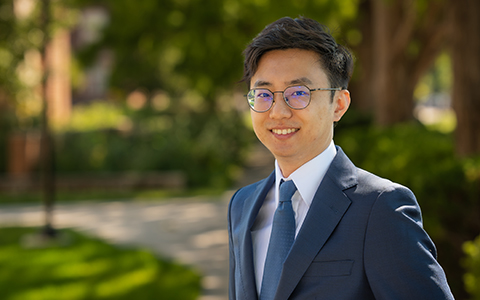
From Algorithms to AI: Lin An brings new approach to business decision-making
Sep 24, 2026
Lin An uses mathematics, optimization, and AI to improve business decision-making. His research combines algorithms with human expertise, an interplay he also explores through his passion for competitive poker.
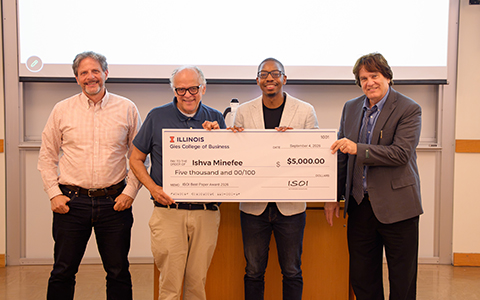
Minefee wins 2026 ISOI Research Paper Award
Sep 23, 2026
The ISOI Research Paper Award is presented annually to honor a published journal article or book that embodies and furthers the mission of ISOI, which is to address unmet demand by academic communities and corporations for transdisciplinary research in strategic organizational design and management.
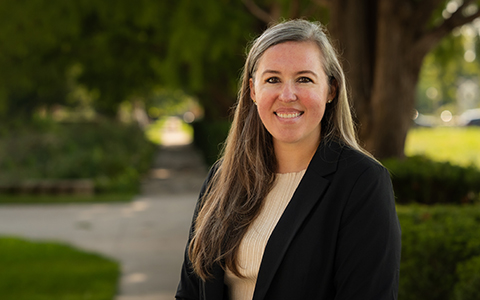
For Grant, the move to Gies Business becomes a reunion with Illinois
Sep 21, 2026
Grant’s research explores how technology and inclusive financial education shape investor behavior, including the effects of mobile interfaces, gamification, and ADHD.
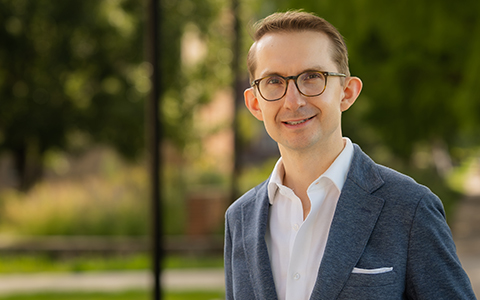
Mollner uses mathematical theory to solve real-world problems
Sep 18, 2026
New Gies finance professor Josh Mollner uses mathematical theory to study how modern trading systems affect market liquidity, pricing, and retail investors. After a decade at Northwestern, the award-winning teacher joins Gies to expand his market-design research and collaborate with its finance scholars.

Rise of alternative credit adds another layer to US household debt concerns
Sep 17, 2026
Rising US credit card debt tells only part of the story of household financial stress. Gies Business finance professor Avantika Pal says consumers are increasingly supplementing traditional borrowing with alternative credit products such as online installment loans and short-term cash advances.

PODCAST: When Influencers use AI to interact with fans and consumers
Sep 15, 2026
A study of 225 prominent Weibo influencers found that clearly labeled AI-generated replies encouraged users to comment on later posts, including sponsored content. They worked best when they matched the influencer’s voice, addressed the specific comment, arrived after a believable delay, and were used selectively.

Chen joins Gies Business with mission to make tax more accessible
Sep 11, 2026
Former Deloitte tax consultant Shannon Chen joined Gies Business as an assistant professor of accountancy, seeking a career with lasting purpose. Through award-winning teaching, she makes complex tax concepts approachable and helps students see accounting as a path to opportunity.

Bucheli wins Richard M. Hodgetts Award for work in management history
Sep 10, 2026
The award recognizes scholars who have made substantive contributions to scholarship, teaching, and service in the field of management history.

Study shows that AI can lower the cost and increase the speed of clinical drug trials
Sep 08, 2026
Generative AI models could help researchers use real-world patient data to identify promising treatments more quickly and potentially reduce the cost and time of clinical drug trials, while giving human experts a transparent way to validate AI’s reasoning.
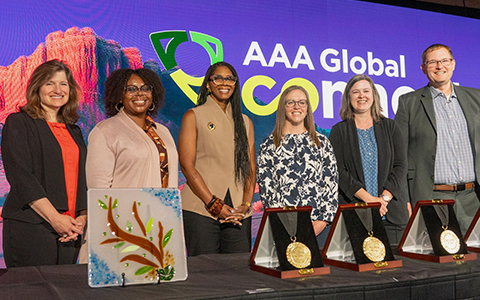
Karneisha Wolfe receives 2026 Wildman Medal Award
Sep 03, 2026
Wolfe and her coauthors' award-winning work finds that committees are increasingly assigned responsibilities beyond their traditional role, which can improve governance while also creating overwork, weaker oversight, and a “box-checking” mentality.