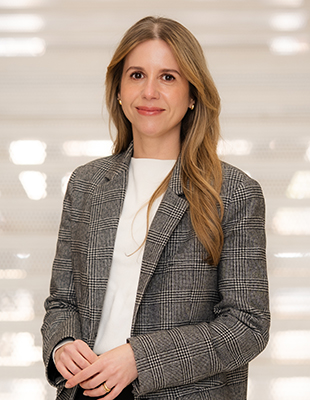
Julia Fonseca, associate professor of finance at Gies College of Business at the University of Illinois, has been named to Poets&Quants' 2026 list of the Best 40-Under-40 Business Professors. The Poets&Quants 40-Under-40 list recognizes early-career faculty making an outsized impact in their teaching, research, and service.
"This recognition is very meaningful,” Fonseca said. “We're all committed to making top-tier business education more accessible here at Gies, and I'm thrilled to play a role in that.“
Fonseca, a Research Associate at the National Bureau of Economic Research and an Associate Editor of the Journal of Finance, is an economist focused on household, development, and labor finance. Much of her research examines how finance shapes labor, jobs, and mobility – where and how we work.
She brings that expertise into the classroom, as well. In her course FIN 535: Wealth Management, Gies Business Master of Science in Finance students apply research insights to real-world scenarios in insurance, investing, real estate, and long-term financial planning.
Fonseca’s research has been published in leading finance and economics journals, including the Journal of Finance and the Journal of Financial Economics. Her recent work on mortgage lock-in with Lu Liu received the 2025 Brattle Group First Prize, the Journal of Finance’s highest honor for research in corporate finance, and her work has been supported by more than $350,000 in competitive funding. She serves as an associate editor at the Journal of Finance and the Review of Finance. Fonseca’s research on the effects of rising mortgage rates has been covered in media outlets such as The New York Times, The Economist, and the Wall Street Journal.
Prior to joining Gies College of Business, Fonseca earned her PhD in economics from Princeton University.
Read more:
- Listen to Fonseca explain why erasing small medical debts didn’t improve financial health on Research Reverb.
- Read about how rising mortgage rates reduce housing mobility and keep homeowners “locked in.”