When Jocelyn Reyes Angel first heard about the AI tutor being deployed in her corporate finance class, she was “iffy” on the idea. Like most freshmen entering college, she was already using ChatGPT to help study. But eventually, she saw its limitations.
“Most of the concepts were very general and not targeted towards my subject,” said Angel. So, she decided to give the virtual tutor a try. And ever since then, it’s been her go-to study companion.
Unlike most chatbots, the virtual tutor created for FIN 221: Corporate Finance is trained exclusively on material taught in class, so it doesn’t provide vague or conflicting information. And it’s always ready to help, dispensing impersonal facts in a very personal way.
“It actually feels like you're talking to someone,” said Angel. “If I would get something wrong, for example, it would be like, ‘Okay, not quite. This is what you still need work on. Let me explain this topic again and then you can repeat it back to me and give me your own understanding of what you captured.’”
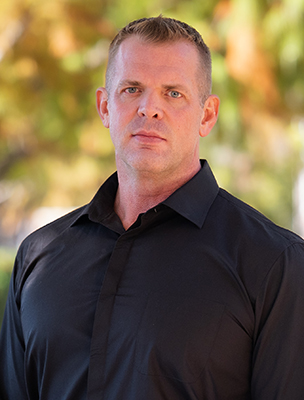
That’s music to the ears of Jason Satchell, teaching assistant professor of finance, who created the tool to help give students who are often new to the field of finance a more personalized and customized learning experience. Faculty at Gies Business, like Satchell, aren’t simply adding AI tools into existing classrooms; they’re rethinking how students learn in a world where AI is becoming part of nearly every workplace. The goal is to help students develop the judgment, adaptability, and communication skills needed to think critically and work effectively alongside AI.
Satchell leads three sections of the course, which is a requirement for all Gies College of Business students. “It doesn’t matter if they’re studying marketing, accounting, finance or they’re undeclared, they take this class,” said Satchell. “And we’ve got to be there to support them in any way we can. Saying, ‘Here’s your information, go figure it out,’ is just not enough.”
Instead, Gies faculty are increasingly focused on creating learning environments where students actively engage with ideas, test their understanding, receive feedback, and build confidence through iteration. For Satchell, incorporating AI in the classroom is proving useful in a number of ways. For one, it accommodates different learning styles, allowing students to work through any questions they might have, any time of day. For another, it triages basic questions, so he can use office hours to focus on other things like helping students improve their interview skills. In many ways, his classroom mirrors the future workplace where AI will handle routine support and information retrieval, while humans focus on mentorship, judgment, and deeper problem solving.
Ultimately, said Satchell, this use of AI also makes him a better teacher, because the chatbot generates anonymized data he can use to improve the instruction he provides.
“If I see a lot of people saying, ‘I don’t understand earnings before taxes,’ I can immediately do an extra five-minute video and say, ‘We’re getting a lot of questions on this. Maybe I didn’t do enough in class to explain it. Let’s go a little bit deeper.’”
Satchell plans to roll out additional AI-based learning tools soon, including simulated case studies that provide students with instant feedback on the decisions they make, and a revamped discussion board offering a new, “devil’s advocate” feature. The latter will challenge students by responding to their posts with AI that mimics Satchell’s style and encourages them to look at the same topic in a different way.
For Satchell, the whole goal is providing value in a time when students are increasingly questioning the worth of a college degree. “We live in an environment where information is so free that students could essentially teach themselves,” said Satchell. “So, what additional value do we provide? As schools go forward, we need to provide more feedback and more ways to get the material to students in a way they can understand.”
When Technical Skills Become Table Stakes
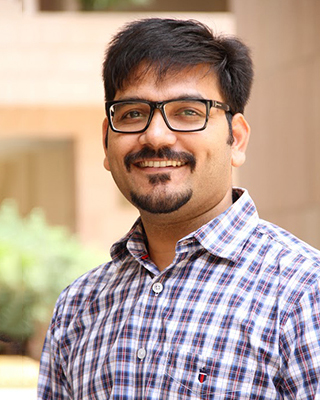
AI isn’t just changing how faculty teach, said Ashish Khandelwal, teaching assistant professor of business administration, it’s also changing what they teach.
“Learning itself is a moving target,” said Khandelwal, who leads students through a wide range of subjects from analytics to data engineering. “When I started teaching data science seven years ago, knowing how to write Python code, which model to apply, and how to adjust the parameters were skills that would generate a lot of value. But in 2026, that’s a commodity. The real skill is being able to make sound design decisions and explain them to someone who doesn't care about the technical details. But that's hard to teach, and even harder to assess at scale.”
As AI automates more technical tasks, Gies faculty believe human judgment becomes even more valuable. The challenge is no longer simply producing information, but evaluating it, communicating it clearly, and making thoughtful decisions in complex situations.
Khandelewal created a new AI tool called StakeholderSim that tests students on those key skills. In BADM 558: Big Data Infrastructure, students spend a month building a cloud data platform on AWS for UrbanFleet, a fictional last-mile delivery company, then present their architecture to four AI personas at the company: the VP of operations, the CFO, the CTO, and the compliance director.
Through the interactive simulation, students learn that different stakeholders have different priorities and how to adapt their presentation to address them. The exercise reflects a growing reality across industries: success increasingly depends on knowing how to coordinate people, technology, and competing organizational needs – not just technical expertise alone.
For example, one student found that the VP of operations kept redirecting him toward business implications whenever he reached for technical language, while the CTO engaged comfortably in the same terms. As students deal with these various personas they develop confidence, learning to push back when a stakeholder requests something outside the project brief, rather than quietly over-promising.
In addition to the virtual reviewers, the program includes a fifth persona, a mentor who supports students throughout the challenge – offering psychological safety and hints when they get stuck, but always asking students to reflect on any hint in their own words so Khandelwal can see whether the students actually understood it.
During their presentations, a screen-locking feature prevents students from simply copying and pasting answers from another AI tool during the simulation. And when it's over, students receive a grade based on a number of different criteria, including how honest they were about their architecture's limitations.
“If they’re not learning how to use AI, they’re going to be left behind”
For Khandelwal, banning students from using AI at this point would be about as pointless as banning calculators. “When I give students homework, they can use AI. In fact, I encourage them to use it, because if they’re not learning how to use AI, they’re going to be left behind,” he said. “But I want to get into their brains. I want to know how they’re thinking and how well they’re able to communicate, and this tool enables me to do that.”
For Khandelwal, the goal isn’t to stop students from using AI. It’s to help them become more thoughtful, self-aware, and effective decision-makers while using it.
For students like Angel, who will soon enter a business world that’s being radically reshaped by AI, it’s encouraging to see Gies faculty embracing new technology and adapting it for the classroom.
“I hope to see a lot of professors being more open-minded about AI and using it as a resource. I know they're worried that it could go overboard and students may rely on it too much, but I feel like if it's used effectively and it's used within limits, it could really help students,” said Angel. “It definitely helped me.”
As artificial intelligence continues reshaping industries, Gies Business faculty see their role not simply as teaching students how to use new technologies, but helping them learn how to think critically, adapt confidently, and lead responsibly in environments where humans and AI increasingly work side by side.