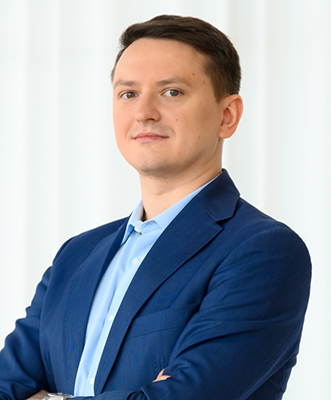
They say you can’t go home again. But if you are Gies Professor Mike Szymanski, you can sometimes revisit your research.
Szymanski recently completed a replication of a study he first did several years ago as part of his PhD program. Using sports as a focus, he and his coauthor, Gies PhD graduate Junbeom Park, examined the impact of coaches with multicultural backgrounds on the success of sports teams. This study, “Multicultural Managers and Competitive Advantage: The Second Leg. Replicating the Effect of Managers' Multicultural Backgrounds on Organizational Performance,” was part of a special issue of the Journal of International Management featuring replication studies.
Szymanski defines multicultural individuals as those who embodied two or more cultures. Perhaps they lived for a time in one country and moved to another. Or their family life is strongly of one culture, but at school or work they experience a different culture. These types of people would embody two cultures and would be multicultural.
“The main area I do research on is the role of multicultural individuals – people who have experienced and internalized two different cultural systems,” Szymanski said. “I look at how managers who are multicultural contribute to team performance. It’s an overarching research question, one of my research questions that I've been trying to answer.”
Why replicate a study?
A growing issue in some academic fields is reproducibility of research studies. Can they be replicated to show comparable results? If a finding cannot be replicated, that may cast doubt on the conclusion as to its trustworthiness. “Many studies are difficult to replicate. In international business and strategy, researchers often rely on proprietary company data that are not publicly available. Even when similar data can be obtained, companies operate in different industries, countries, and organizational contexts, making it difficult to reproduce exactly the same findings,” Szymanski said.
When the Journal of International Management announced a special issue that would focus on replications of studies, Szymanski thought that this would be a good opportunity to revisit a study he had done as part of his dissertation research. “I was working with one of our PhD students, Junbeom Park, and I said, ‘Hey, do you want to just take a look at the new data, use exactly the same methods and see if you can find the same results?’ And that's what we did,” Szymanski said.
Initial study and replication
The original study in 2019 looked at coaches with or without multicultural backgrounds and the success of their teams in football (soccer) competitions in Europe and South America, as well as the World Cup. He wanted to see how a multicultural background could impact leadership and performance.
The new replicating study incorporated newer tournaments and competitions in Africa and Asia – to see if there is any geographical difference for the result. “We collected more data, and we collected more recent data. But Junbeom used exactly the same coding protocols,” Szymanski said. “The results were not identical as seen in the first paper, but were remarkably similar, which kind of proves the point of the original study from eight years ago.”
Both studies examined international football (soccer) tournaments to see if the cultural backgrounds of the leaders (coaches) provided any advantage to a team in international play. Both studies indicated that teams coached by individuals with multicultural backgrounds did better in more global tournaments. Coaches with monocultural backgrounds did better in regional tournaments.
The second study extended the analysis by including a larger number of international tournaments and, importantly, women's national teams. The results showed that the advantages of multicultural coaching backgrounds were just as evident in women's football, suggesting that the benefits of multiculturalism are not limited to men's competitions but generalize across different contexts.
“Our study found, and then demonstrated a very neat way, that multicultural individuals are poised for success in an international setting,” Szymanski said. “That makes sense, because in an international setting, they get to experience all of these cross-cultural challenges. But when they are placed in a very homogeneous environment, that advantage doesn't really exist.”
Why sports teams?
Szymanski has a simple answer to why he studies leadership through sports teams: “Everyone has access to that data. So, everyone can go and see what the result of, say, the 1994 tournament was, what was the nationality of the coach, and what was the background of the coach.”
Using sports data offers another important advantage: it creates conditions that are remarkably consistent across teams and competitions. The rules are the same, team sizes are similar, and success is measured objectively, making it easier to isolate the effects of leadership and multicultural experience. Because sports generate enormous public interest, the underlying data are also widely available and easy to verify. “Because sports generate so much interest, you can simply check everything,” Szymanski said. “It allows us to eliminate many of the confounding factors that often make management research more difficult to replicate.”