Cassie Mongold’s first job after finishing her PhD was a yearlong postdoctoral fellowship at the Financial Accounting Standards Board (FASB), one of the primary organizations that sets accounting guidelines for public firms. Part of her job was to inform members of the board about academic research that could help them make policy decisions.
“I noticed that when academics write papers,” she said, “they always have a line in the intro that says, ‘This is useful for standard setters.’ But while I was working at the FASB, I started to wonder, are the standard setters actually finding these papers useful? And how are standard setters going about finding this research?”
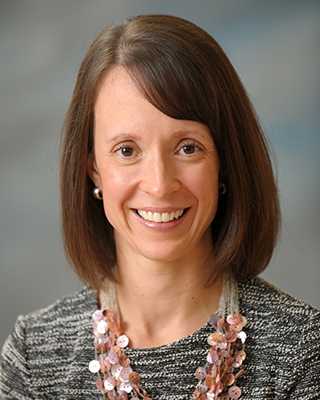
After her year at the FASB, Mongold moved on to Gies College of Business at the University of Illinois Urbana-Champaign, where she’s currently an assistant professor of accountancy. Now on the other side of the academic-standard setter divide, she continued to wonder whether standard setters found academic research useful and how researchers could better address their needs.
There had been, she found, very little previous research on how accounting standard setters use academic research in their decision-making and whether they believe academic research is relevant to their work. Along with two colleagues – Christie Hayne, an associate professor of accountancy at Gies Business, and Shannon Garavaglia, an assistant professor of accounting at the University of Pittsburgh – she decided to find out. Their findings were recently published in a paper called “The Academics of Standard Setting: A Field Study of Financial Reporting Standard Setters’ Engagement with Academic Research” in The Accounting Review.
The three researchers decided that the best way to find out what they needed to know was to interview the standard setters rather than merely send out a survey.
“Interviews provide a lot more flexibility than a survey,” Hayne said. “In an interview, we can ask, ‘Well, what about this? What do you think of as academic research?’ So we can really do a more thorough vetting of instances when a participant says no or limited use. And likewise, when a participant did demonstrate a more sophisticated use of academic research, we can push them for more examples.”
They were able to interview 22 staff members from different levels of two standard setting boards to find out why they weren’t using academic research more often and what could be done to change that.
“It’s not that standard setters don’t care about academic research,” Mongold said. “They really, really do. And they really try to use it, but they run into a lot of roadblocks.”
Why Academic Accounting Research Often Misses Policymakers
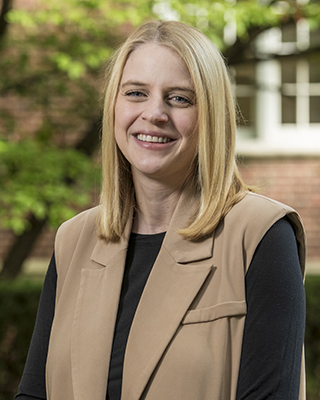
Most standards boards try to keep at least one academic on staff, and they also rely on postdocs like Mongold and Garavaglia to help them stay up to date on the latest research. However, accounting is a broad field.
“It would be impossible for one or a small number of academics to possess all of the expertise that a standard setter would find beneficial,” said Hayne. And to hire a range of experts, said Mongold, “would not be very feasible from an economic perspective.”
So one of the main roadblocks is that most standard setters lack research expertise to find the information they need and don’t regularly engage with academics who can explain things to them more clearly. Academic papers are available to them, but, says Hayne, often space limitations mean that the authors can’t include all their findings. “So there may be more information to be gleaned from speaking with authors,” she says. “Especially because sometimes a standard setter might be reading a single paper, but the author might have a portfolio of relevant research they could bring together.”
Another problem is that academic research and policymaking don’t always work in sync. It can take years to research and publish a paper, and by the time the paper makes it out into the world, the standard setters may have already made their decisions. Or, if a paper does exist on a certain topic, it may not be relevant to the question the standard setters are asking.
“It would be helpful if standard setters and academics were in communication more at the beginning of a project,” says Mongold, “because then everyone could get on the same page, like what are the important issues here that we’re thinking about?”
Academics, however, value their independence and objectivity, Hayne says, and there’s the danger that working too closely with the standard setters would skew the research more toward what the standard setters want rather than what academic research would support. Academics are also more likely to think about how a policy affects everyone while, say, auditors or investors or accountants may be more concerned about how it affects their own personal workload.
The result of these disconnects is that sometimes the standard setters make policy decisions without the necessary evidence-based research to back them up.
How Researchers and Standard Setters Can Work Together
The solution to all these problems, the researchers say, is better two-way communication between the standard setters and academics.
Mongold suggests establishing a more formal working relationship between the standards boards and the academic community. “It would be great if we could establish some way for academics who are interested in an issue to connect directly with standard setters and talk about the relevant things that academic research could help them with instead of, as an outsider, thinking, ‘Oh, standard setters are looking at leases, let me do something related to leases,’” she says.
They also believe the publication process could be more helpful to non-academics. Editors, for instance, could put out calls for papers that have an impact on the real world. “Our paper shows that standard setters really want to use academic research,” Mongold says, “but a lot of the time they feel like it doesn’t exist or it’s not accessible.”
Hayne also hopes that standard setters will feel more comfortable reaching out to academics about their work. “It might give authors a chance to say something that’s a bit beyond the paper or didn’t make it into the paper,” she says.
Now that their paper is out in the world, Mongold and Hayne hope that it will generate discussion and perhaps get the wider accounting community to start thinking about ways to bring the standard setters and academics together.
Otherwise, says Hayne, “we risk losing the benefits of the research or of evidence-informed policymaking.”